
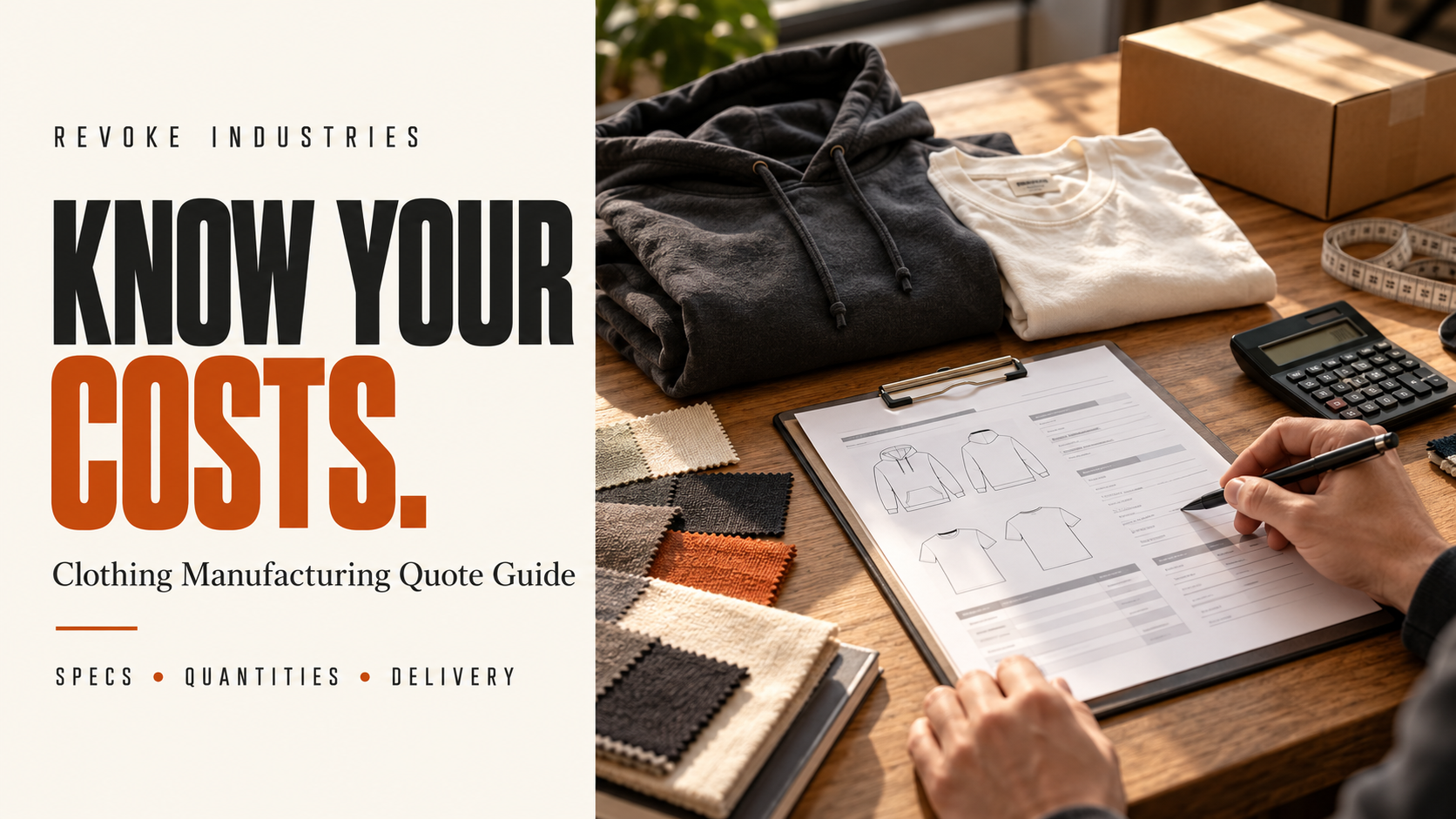
You send the same hoodie photo to three manufacturers and receive three very different prices. One includes embroidery. Another assumes a printed blank. The third does not mention shipping.
Before choosing the lowest number, check whether the suppliers priced the same product and services.
A useful clothing manufacturing quote starts with a clear request. For US brands sourcing overseas, that request should explain the garment, order breakdown, development needs, and delivery destination well enough for a manufacturer to identify missing decisions.
To request a clothing manufacturing quote, send your product specifications, quantities by style and color, size breakdown, decoration details, packaging requirements, and delivery location. Ask the manufacturer to separate unit pricing from development, sampling, and delivery charges, and to list assumptions, exclusions, timing, and quote validity.
What is a clothing manufacturing quote?
A clothing manufacturing quote is a supplier’s proposed price for a defined product and scope of work. To assess it, you need to know what was priced, the quantity used, which services are included, and what remains unresolved.
An early estimate can help you explore an idea. Treat it as a planning figure when fabric, fit, decoration, or quantities are still open. Ask what must be confirmed before the supplier can issue an updated quote based on the final specification.
For example, “heavyweight oversized hoodie” leaves several decisions unanswered. A technical document identifying the fabric, garment measurements, construction, artwork, and labels gives the conversation a more specific starting point.
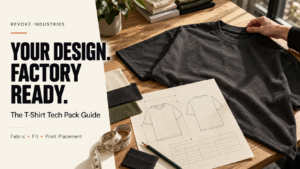
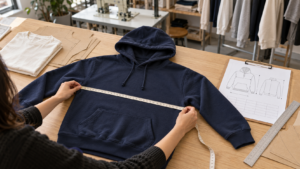
Our hoodie tech pack guide explains those requirements. For tees, use the T-shirt tech pack guide.
1. Define what you want the manufacturer to supply
Start by stating whether you want to decorate an existing blank or develop a custom cut-and-sew garment. Also explain whether you already have patterns, graded measurements, production artwork, and approved materials.
Identify work you need help completing. “Please quote pattern development separately” is clearer than assuming that development is part of the garment price.
If you are comparing construction options, request them as named alternatives. For example, ask for separate quotations for a pullover and a zip-up version instead of combining both into one ambiguous product brief.
Keep the same brief version across suppliers. Otherwise, a revised fabric or decoration choice can make an older quotation look cheaper simply because it covers different work.
2. Send a complete request for quotation
A request for quotation, or RFQ, does not need complicated formatting. It needs identifiable files, clear decisions, and visible questions. Use the checklist below to prepare your inquiry.
| Information | What to include |
|---|---|
| Product and files | Style name, product type, dated tech pack, reference images, and any existing pattern files. |
| Fabric and trims | Composition, construction, target weight, finish, color references, and required components. |
| Fit and sizes | Intended fit, measurement chart, size range, and development work still needed. |
| Order breakdown | Units per style, color, and size; identify which quantities are confirmed or provisional. |
| Decoration | Artwork, method, dimensions, placement, colors, and sample requirements. |
| Labels and packing | Branding files, label placement, folding, individual packaging, and carton requirements. |
| Delivery and schedule | Destination city, state, ZIP code, required arrival date, and preferred delivery options. |
| Requested breakdown | Unit price, separate charges, exclusions, payment stages, timing assumptions, and validity date. |
If a detail is undecided, label it “to be confirmed” and ask for a proposal. Do not turn a guess into a specification just to complete every field.
For fabric weight, state the units clearly. Our fabric GSM guide explains how weight fits into a broader material specification.
3. Break the quantity down beyond the total
“200 pieces” leaves the manufacturer guessing about the number of styles, colors, and sizes. Provide a breakdown and ask which minimum quantities apply to each part of the order.
Also ask whether a specific material or trim introduces a separate minimum. Request the cost implications of your actual combination rather than relying only on an advertised starting quantity.
Illustrative order breakdown: One T-shirt style, 200 units total: 100 black and 100 ivory. Each color contains 20 small, 30 medium, 30 large, and 20 extra-large units. This is an example of clear communication, not a recommended size ratio or Revoke Industries’ minimum order.
If you want quantity options, keep the garment specification consistent for each tier. Ask the supplier to flag any material, process, or packing change assumed at a different quantity.
4. Ask what the unit price includes
Request a line-by-line explanation of the quoted scope. Depending on the proposal, development, sample revisions, decoration setup, labels, or packaging may appear separately or be included. The quotation should make that clear.
Ask how sample charges are treated if you proceed with an order. If a credit is offered, record its conditions rather than assuming every sample payment is automatically refundable.
For delivery to the United States, provide the destination and request a clearly defined delivery scope. Ask which freight, insurance, destination handling, customs brokerage, duties, or taxes are included or excluded, as applicable. Have unresolved import charges checked before calling a figure your total delivered cost.
If the quote uses a shipping trade term, ask for the exact term, named place, and a plain-language explanation of the responsibilities it assigns. A phrase such as “shipping included” should still identify the destination and exclusions.
5. Compare quotations using the same checklist
Build your comparison around the product you intend to order. Mark unanswered items as “not confirmed” rather than treating them as free or included.
| Compare | Question to resolve |
|---|---|
| Specification | Did each supplier price the same document version, fabric, construction, and decoration? |
| Quantity and currency | Are quantities identical, and is each price clearly stated in the same currency? |
| One-time costs | Which development, setup, and sample charges sit outside the unit price? |
| Included services | Are labels, packing, agreed checks, and delivery priced on a comparable basis? |
| Schedule | What must happen before the quoted lead time starts, and what does it end with? |
| Payment and validity | What are the payment stages, quotation expiry date, and conditions for price changes? |
Illustrative arithmetic: At 200 units, a $20 unit price totals $4,000. An $18 unit price plus $500 in separate charges totals $4,100. This simplified example assumes an otherwise identical scope and excludes any unspecified costs. It is not a market price or a Revoke Industries quotation.
Price comparison also needs product evidence. Review samples and the manufacturer’s responses to your specifications before deciding that two offers provide equivalent results.
6. Confirm the schedule and revision process
Ask for separate timing estimates for development, sampling, revisions, bulk production, and delivery. Clarify whether the supplier means working days or calendar days.
Define the starting conditions. A bulk-production estimate may depend on approvals, materials, payment milestones, or scheduling arrangements specified in the proposal. Ask the supplier to identify those dependencies in writing.
Include your required arrival date and discuss whether it is feasible before planning a launch around it. Our clothing manufacturing lead-time guide covers the full timeline.
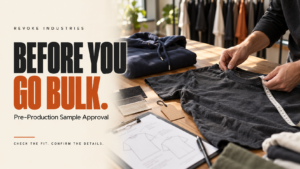
When sampling changes the product, request a revised quotation tied to the updated specification. Use a documented pre-production sample approval before releasing the agreed bulk work.
Copy-ready clothing manufacturer inquiry template
Subject: Quote request —

Hello,
We are developing for [brand]. Please review the attached [tech pack version / reference files] and quote the following scope:
- Product and fit: [Details]
- Fabric and trims: [Specifications or options needed]
- Quantity: [Units by style, color, and size]
- Decoration: [Method, artwork, dimensions, and placement]
- Labels and packing: [Requirements]
- Development needed: [Patterns, grading, sampling, or other work]
- Delivery: [City, state, ZIP code, and requested arrival date]
Please separate the unit price from development, sample, setup, packing, and delivery charges where applicable. Confirm the quotation currency, minimum quantities, exclusions, payment stages, validity date, and estimated schedule with its starting conditions.
Please identify any missing information or assumed substitutions before finalizing the quote.
Thank you,
[Name / brand / contact details]
Frequently asked questions
Can I request a manufacturing quote without a tech pack?
Yes, you can start with reference images and a written brief. Identify the specifications and development work still needed, and ask which assumptions the estimate uses. Confirm pricing again when the relevant details are resolved.
Why do manufacturers quote different prices for the same design?
Check the scope first. Suppliers may have interpreted materials, construction, decoration, quantities, or delivery differently. Send the same specification and ask each supplier to list assumptions before comparing the offers.
Does a bulk clothing quote include samples?
Do not assume it does. Ask for sample fees, revision charges, courier costs, and any credit conditions to be stated separately or explicitly marked as included.
Should I share my target budget?
A target budget can help frame the discussion if you also explain what it covers. Distinguish a garment-only target from a delivered-cost target, and identify which product requirements you are willing to reconsider.
What should I do after receiving a quote?
Resolve missing details, confirm the specification version, discuss samples, and review the proposed terms. If the product changes during development, obtain an updated quotation before committing to the revised scope.
Request a quote for your clothing project
Send Revoke Industries your design files, product requirements, quantity breakdown, and delivery destination. Include any decisions you need help developing so the proposed scope can be discussed clearly.
Related industry reading: Techpacker’s clothing manufacturing overview. The inquiry template and comparison worksheets are editorial suggestions. Actual prices, minimums, schedules, and order terms must be confirmed for your project.

Add comment