
The quick answer
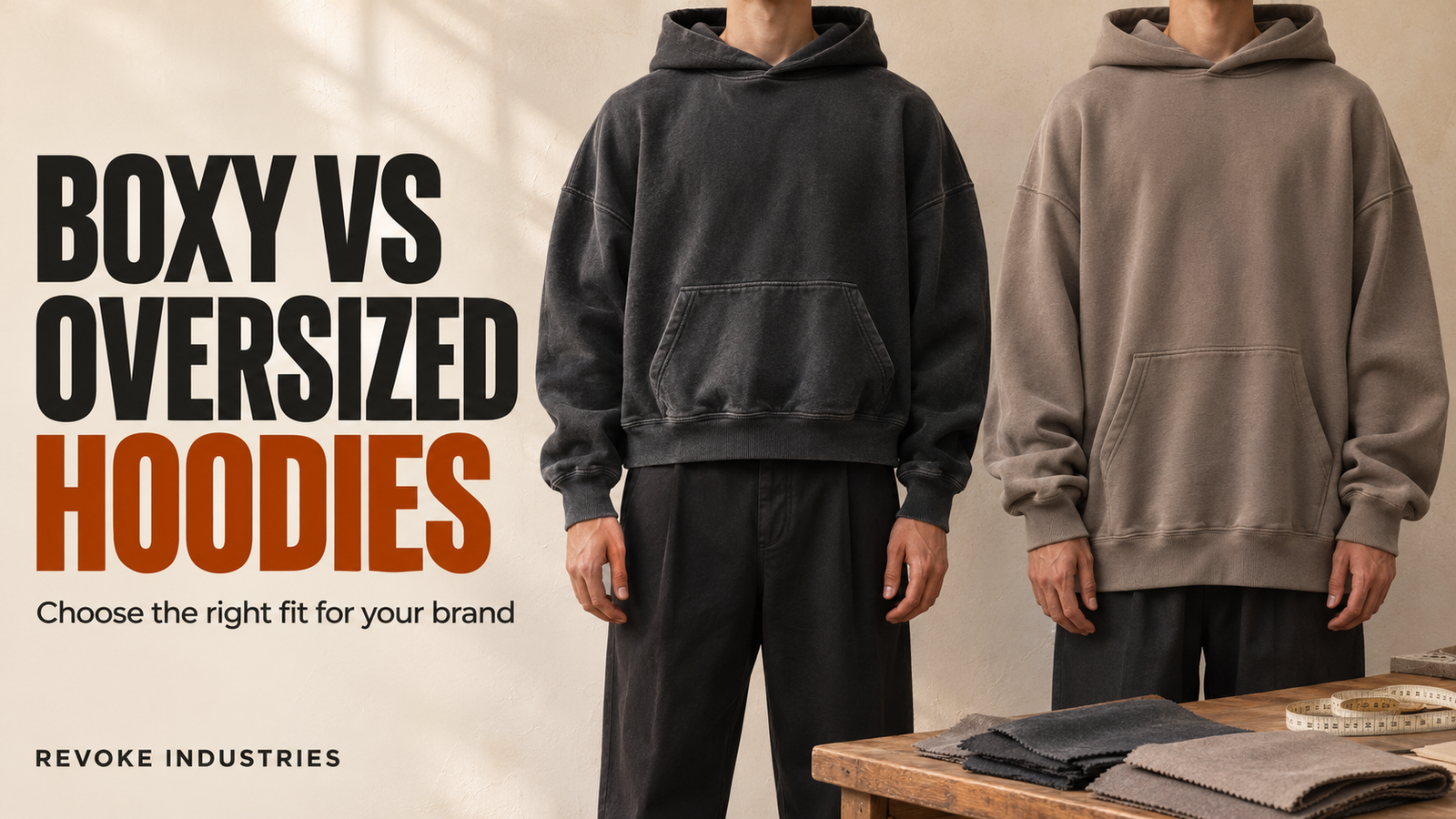
A boxy hoodie describes a broad, relatively short silhouette. An oversized hoodie describes a deliberately roomy fit relative to the intended wearer. A hoodie can be both. For manufacturing, specify body width, length, shoulder placement, sleeves, and hem behavior instead of relying on either label alone.
Two hoodie samples can have the same chest width and look completely different. One ends near the waistband with a compact shape. The other extends farther down the body and feels loose through the sleeves. Calling both “oversized” does not tell your manufacturer which result you want.
For US clothing brands developing a streetwear collection, the boxy vs oversized hoodie decision starts with proportions and customer preferences. This guide explains the difference, the measurements worth defining, and the sample checks that help turn a reference image into an approved fit.
Why boxy and oversized hoodies deserve attention
In its September 2026 fleece report, Impressions highlighted boxy and oversized silhouettes, dropped shoulders, heavyweight fabrics, and garment-dyed finishes through interviews with apparel suppliers. Lane Seven’s 2026 catalog also includes an oversized Urban Hoodie in heavyweight fleece.
These are useful product-development signals, not proof that every audience wants the same hoodie. Before selecting a fit, consider how your customers dress, what they layer underneath, and whether they prefer a shorter or longer body. Your collection needs a clear fit identity that customers can understand.
Boxy vs oversized hoodie: what is the difference?
Boxy describes shape; oversized describes roominess. The terms overlap, and brands do not apply them consistently. Use the comparison below as a starting point for a design discussion, not as a universal sizing standard.
| Feature | Boxy direction | Oversized direction |
|---|---|---|
| Main idea | A wide silhouette with relatively compact body length. | Extra room compared with a closer fit on the intended wearer. |
| Body length | Often shorter relative to width; not necessarily cropped above the waist. | Can be short, regular, or long. Define the intended hem position. |
| Shoulders | May use a dropped shoulder to support the broad shape. | Often dropped, but shoulder position still needs its own specification. |
| Sleeves | Width and length should balance the compact body. | May be fuller or longer; extra sleeve length is not compulsory. |
| Hem | A straight or gathered finish can create different versions of the shape. | A relaxed or fitted hem changes how the extra body volume sits. |
| Possible overlap | A short, wide hoodie with generous room through the chest can be both boxy and oversized. | |
On smaller screens, swipe horizontally to view all columns.
Choose the fit around your customer
Start with the wearer and outfit you are designing for. A shorter, wider hoodie may suit a collection built around high-rise or wide-leg bottoms. A longer, roomy version may better match customers who want more coverage. Neither choice automatically produces a better garment.
Define the intended wearer’s body measurements for your development size, the layers worn during fitting, and where the finished hem should sit. A reference photo without the model’s height or garment size can help communicate a mood, but it is a weak substitute for measurable instructions.
If you are undecided, ask about developing two fit options before expanding the size range. Confirm the added sampling cost first. Compare both on the same wearer under the same conditions so differences in posture or styling do not drive the decision.
The measurements that turn a fit idea into a specification
Your measurement sheet should describe the finished garment. Keep body measurements separate, identify inches or centimeters clearly, and use a diagram showing each measurement’s start and end points. Techpacker’s garment spec-sheet guide explains how measurements and tolerances fit into a tech pack.
| Point to define | What to record | What to review on the sample |
|---|---|---|
| Chest width | Flat width at a marked location below the armhole; identify it as a half-width measurement. | Room across the chest and around the body when worn over the intended layer. |
| Body length | A defined shoulder or back-neck reference to the bottom edge; state whether ribbing is included. | Hem position at rest and during normal movement. |
| Shoulder width | The agreed seam-to-seam measurement for the shoulder construction. | Where the shoulder seam sits on the wearer. |
| Sleeve length | The exact starting point and whether cuff depth is included. | Wrist coverage with arms relaxed and extended forward. |
| Sleeve width | A marked upper-sleeve measurement location and cuff opening. | Arm movement, sleeve volume, and excess fabric at the wrist. |
| Hem opening | Relaxed opening and rib depth; define a stretch method if a stretched measurement is required. | Whether the hem hangs straight, grips, or creates unwanted ballooning. |
These are starting points, not a complete production specification. Add hood dimensions, neck opening, pocket size and position, and other construction details to your hoodie tech pack. Agree on tolerances for individual measurements and identify whether specifications apply before or after the approved wash process.
Do not turn a regular hoodie into an oversized fit by guesswork
Using a larger regular-fit size may add chest room, but it also changes other proportions. The body, sleeves, neck, and pocket placement may become unsuitable for the intended wearer. A deliberately oversized style needs those relationships reviewed together.
The same applies when shortening an existing hoodie to make it boxy. Check where the kangaroo pocket finishes, how much space remains above the hem, and whether the rib pulls the body inward. Cropping the length alone may leave the rest of the design visually unbalanced.
How fabric changes the finished silhouette
A hoodie’s shape depends on both its pattern and material. Compare physical fabric samples for drape, stretch, recovery, surface feel, and bulk. GSM describes fabric mass per unit area; it does not tell you everything about stiffness, softness, or quality.
For a structured look, ask the manufacturer to show suitable fabric options and explain how they behave in the proposed construction. For a softer, slouchier result, compare alternatives on a garment sample. Avoid choosing a weight solely because another brand advertises it.
Review the hood lining, cuffs, and waistband alongside the main fabric. Their weight and tension can change how the garment hangs. If you are still choosing the interior finish, use our French terry versus fleece guide to frame that discussion.
Give your manufacturer a clear fit brief
Send front, side, and back references with short annotations. Explain which features you want from each image, and identify one main direction. Mixing the chest shape from one hoodie, sleeve length from another, and fabric from a third requires development rather than a simple copy.
Example fit brief: “Develop a boxy oversized pullover for our adult streetwear collection. We want a broad chest, dropped shoulders, and a hem that sits near the waistband on our designated fit wearer. Sleeves should reach the wrist without excessive stacking. Please propose a base measurement sheet and suitable fabrics for review before sampling.”
Add your size range, intended quantities by color, artwork, labeling requirements, and target delivery window. The example above communicates direction; it still needs approved measurements and construction details before it can guide production.
Check the sample before approving the fit
- Measure it flat. Record actual measurements against the current specification using the agreed methods.
- Fit it on the intended wearer. Photograph the front, side, and back with consistent posture and layering.
- Check movement. Reach forward, raise the arms, and sit down. Review hem movement, shoulder comfort, and sleeve coverage.
- Inspect connected details. Check hood balance, neck access, pocket reach, cuffs, and waistband behavior.
- Review wash performance. Use the agreed care procedure and compare dimensions and appearance afterward.
- Issue one revision record. Combine marked photos and measurement comments in a dated document with a clear version number.
When you request a change, name the problem and desired result. “The front hem sits too low on our fit wearer” is more useful than “make it trendier.” Ask the pattern maker to assess connected changes instead of independently reducing several measurements.
Once the base fit works, review how it translates across your size range. Do not assume an approved medium automatically confirms the smallest and largest sizes. Agree which additional sizes need physical checking before bulk approval.
Frequently asked questions
Can a hoodie be both boxy and oversized?
Yes. Boxy describes the broad, relatively short shape, while oversized describes extra room on the intended wearer. Specify both the silhouette and the measurements so the manufacturer understands the combination.
Does a boxy hoodie have to be cropped?
No. A boxy hoodie can finish near the waistband or below it while retaining a wide silhouette. Define the exact finished length and intended hem position instead of relying on the word “cropped.”
What GSM is best for an oversized hoodie?
There is no universal best GSM. Choose fabric weight alongside composition, construction, finishing, intended climate, and desired drape. Approve a physical garment sample in the selected material.
Should customers size up for an oversized hoodie?
A style developed with an oversized fit may already provide the intended room in the customer’s usual size. Publish finished garment measurements and clear fit notes so customers can compare it with a hoodie they own.
What should I send a manufacturer for a boxy hoodie sample?
Send annotated references, the intended wearer and fit, a base measurement sheet, fabric direction, construction details, and artwork. Confirm sample costs, revision arrangements, and deliverables before development begins.
Develop your hoodie fit with Revoke Industries
Share your reference images, size range, fabric preferences, and expected quantities. Discuss your custom hoodie project with Revoke Industries and clarify the development requirements before requesting a sample.
Discuss Your Hoodie ProjectSources and further reading: The trend context draws on Impressions’ September 2026 fleece reporting and Lane Seven’s 2026 catalog, linked above. Techpacker’s spec-sheet guide provides further reading on measurement documentation. The fit brief and review checklist are practical planning examples, not universal sizing standards.


Add comment