Finding a clothing manufacturer starts with a clear product brief. Before you ask a factory for its best price, decide what you want to make, who will wear it, how it should fit, and how many pieces you can realistically order.
For a new US clothing brand, the goal is to find a supplier that can turn your specifications into a repeatable product. This guide answers four common questions about finding manufacturers, producing your own clothes, and understanding the 3-3-3 clothing rule.
How do you find a clothing manufacturer? Define your garment and production needs, shortlist suppliers that make similar products, send each the same brief, compare written quotations, and approve a physical sample before authorizing bulk production. Check the minimum order quantity by style and color, along with the full delivery cost.
How do I get a clothing manufacturer?
To get a clothing manufacturer for your brand, approach suppliers with a specific product request and evaluate their ability to make it. A useful first message includes the garment type, fabric preference, design references, quantities, sizes, branding, and delivery destination.
1. Choose your first product and production route
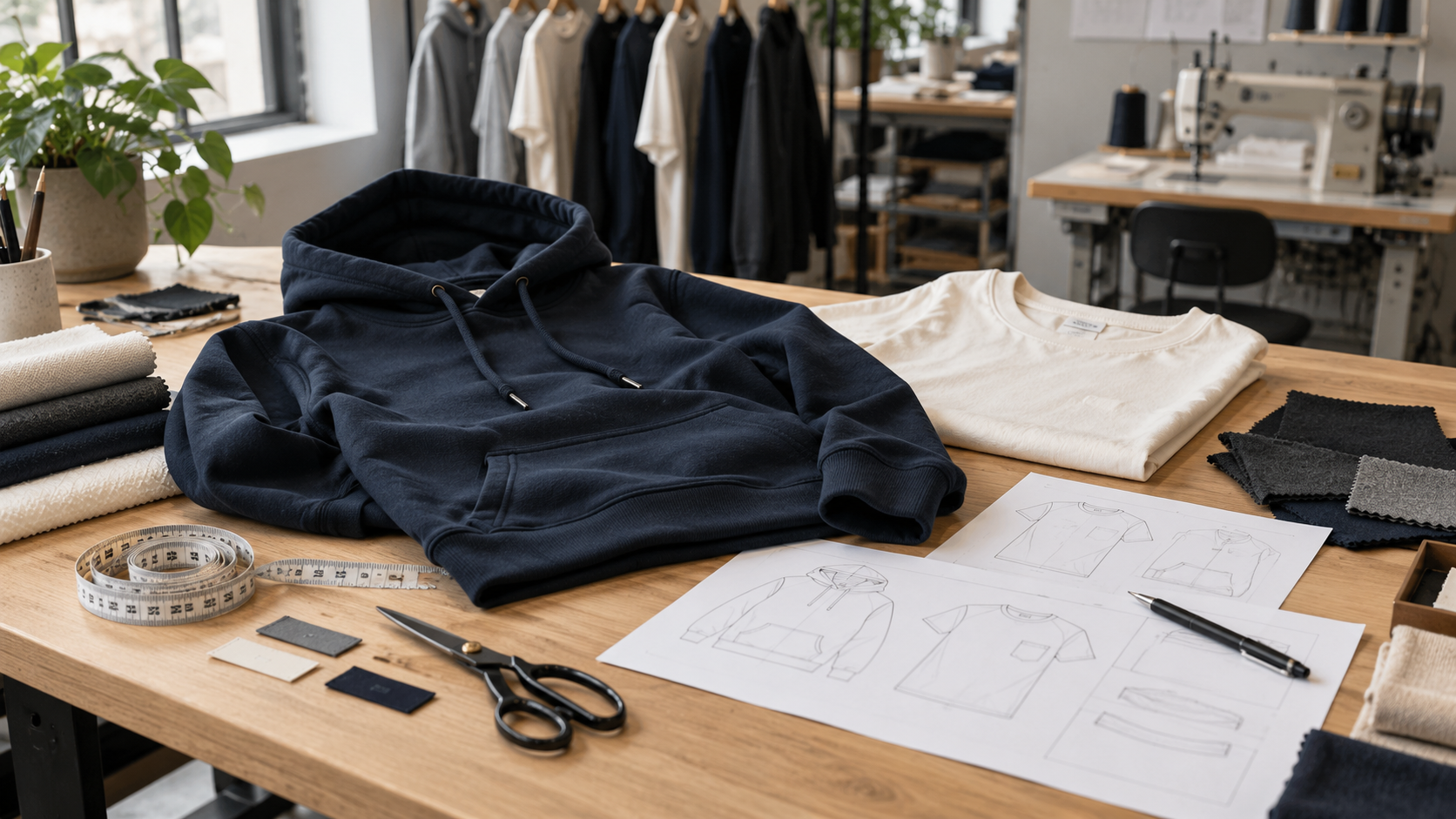
Start with a manageable product range. An oversized T-shirt, a pullover hoodie, and a technical jacket require different materials, patterns, equipment, and quality checks. Look for experience with your exact garment category.
- Decorated blanks: Existing garments with your print or embroidery. Suitable when the available fit and fabric meet your needs.
- Private label: A supplier's existing styles with agreed branding and customization. Confirm what can actually be changed.
- Custom cut-and-sew: Garments developed around your pattern, measurements, fabrics, and construction details. Allow for development and sample revisions.
Review our OEM, ODM, and private label manufacturing services to discuss which route fits your collection.
2. Prepare a brief that can be quoted
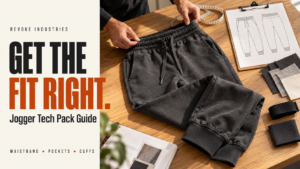
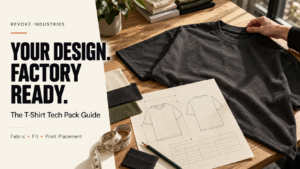
“I need a premium hoodie” leaves too much open to interpretation. Specify the fabric composition, fabric weight if known, fit, colors, size range, logo dimensions, and placement. A tech pack brings these details together in one production reference.
If you do not have a finished tech pack, send sketches and reference photos you are entitled to use. Ask whether the supplier offers pattern development and technical documentation, what these services cost, and who owns the resulting files.
3. Compare suppliers using the same specifications
Send one consistent brief to a small shortlist. A cheaper quote may cover a different fabric, fewer branding details, or delivery only to the factory gate. Ask suppliers to list exclusions and explain any proposed substitutions.
| What to compare | Question to ask |
|---|---|
| Product experience | Can you show relevant production examples and close-up construction details? |
| Minimum order quantity | Does the minimum apply per style, color, fabric, or total order? |
| Development and samples | What do patterns, samples, revisions, and sample shipping cost? |
| Bulk pricing | Are labels, decoration, packaging, and inspection included? |
| Schedule | When does production timing begin, and is delivery time separate? |
| Quality and defects | What measurements, tolerances, checks, and remedies will we agree in writing? |
4. Verify the supplier and approve a sample
Request business details and confirm whether you are dealing with a factory, sourcing agent, or trading company. Ask where production takes place and which operations are subcontracted. A live video walkthrough can add context, but it does not replace sample evaluation or an independent inspection when one is appropriate.
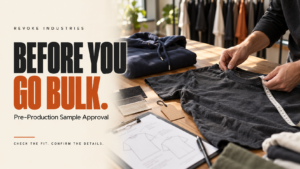
Review the sample for measurements, fit, stitching, decoration, fabric feel, and performance after washing according to the proposed care instructions. Record changes in writing. Keep an approved reference sample so both parties know what bulk production must match.
Where can I get a manufacturer for my clothing brand?
You can find clothing manufacturers through supplier directories, B2B marketplaces, trade shows, referrals, and direct factory websites. Search by product specialization and location, then verify each supplier's capabilities independently.
For example, search for “custom hoodie manufacturer Pakistan,” “small batch cut-and-sew manufacturer USA,” or “private label activewear manufacturer.” These searches describe the work you need more precisely than a general search for clothing suppliers.
- Supplier directories: Use listings to build a shortlist and identify relevant capabilities.
- B2B marketplaces: Compare suppliers, then clarify which company will manufacture the garments.
- Trade shows and referrals: Ask about experience with similar fabrics, order sizes, and finished products.
- Direct manufacturer websites: Review service information and contact the business with your brief.
Shopify's manufacturer sourcing guide also outlines search channels such as directories, online searches, and industry referrals.
Should a US brand choose domestic or overseas production?
Compare actual proposals rather than assuming one location is always better. Domestic production may make visits and communication easier. Overseas production may offer a suitable combination of garment expertise, materials, and pricing for your project. Quantities, development needs, freight, and scheduling can change the result.
Ask for a total cost estimate to your US delivery address. Separate garment costs from development, packaging, inspection, freight, and any import-related charges. Confirm what the quoted delivery terms include before comparing suppliers.
Revoke Industries offers custom apparel and private label manufacturing from Sialkot, Pakistan. Explore our production process and request project-specific details about samples, quantities, and delivery.
What is the 3-3-3 rule for clothing?
The 3-3-3 clothing rule is a capsule wardrobe method: choose three tops, three bottoms, and three pairs of shoes that can be mixed into different outfits. It is a styling concept, not a factory ordering requirement or a formula for launching a clothing business.
One example is three casual tops, three coordinating bottoms, and three footwear options. There are 27 theoretical top-bottom-shoe combinations, although comfort, weather, and dress codes determine which combinations you would actually wear. Claudio Lugli's capsule wardrobe explanation describes this nine-piece approach.
For a brand founder, the useful takeaway is versatility: consider whether your pieces work together. A coordinated hoodie, T-shirt, and jogger collection can make styling and product photography easier. Your launch size should still depend on demand, budget, and supplier minimums.
How do I manufacture my own clothes?
To manufacture your own clothes, develop the design and measurements, select materials, create a pattern, make and revise samples, then approve the garment for production. You can sew small quantities yourself, work with a local sample maker, or hire a manufacturer to manage agreed stages.
Step 1: Define the customer and garment
Decide who the product is for and how they will use it. Describe the fit and function clearly. For US customers, give garment measurements and units rather than relying on “US sizing,” since size labels alone do not define a consistent fit.
Step 2: Develop specifications and materials
Document the garment's front and back, measurement points, stitching details, trims, artwork, labels, and packaging. Review fabric swatches before choosing a material. Fabric weight is one characteristic; composition, knit structure, finish, and wash performance also affect the result.
Step 3: Make and revise the sample
Check the first sample against your specification sheet. Photograph issues and describe each required correction with measurements where possible. If a revision changes the fit, fabric, or construction substantially, review the revised garment before approving production.
Step 4: Confirm sizes, quantities, and the order
Approve the size chart and ask whether additional size samples are needed. Specify quantities by size and color. Confirm the final price, payment milestones, material availability, production timing, and agreed response to defects in writing.
Planning example: An order of 120 pieces split equally across two colors and five sizes contains only 12 pieces per color-size combination. This is an arithmetic example, not a quoted factory minimum. Check whether the supplier accepts your intended breakdown.
Step 5: Inspect, pack, and arrange delivery
Agree on inspection points before production starts. Before dispatch, review the finished garments against the approved specifications and confirm counts, labels, packaging, and shipping documents. Build your launch schedule around inventory arriving and being checked, with time for corrections.
What should I send in my first manufacturer inquiry?
Use this template to give a supplier enough information to start a useful discussion:
Hello, we are developing a clothing collection for the US market and would like a quotation.
Product: [Garment type and fit]
Fabric: [Composition, weight, or guidance needed]
Quantity: [Total pieces and breakdown by color and size]
Branding: [Print, embroidery, labels, and packaging]
Development files: [Tech pack, sketches, or reference images]
Delivery: [City, ZIP code, and desired arrival date]
Please confirm your MOQ per style and color, sample costs, revision policy, estimated production schedule, and what your quotation includes. Please also share relevant examples of similar garments.
More questions about starting clothing production
Can I work with a manufacturer without a tech pack?
Some manufacturers provide development support from sketches or references. Ask what they need to begin, what development costs, and which files you will receive. Approve documented specifications before bulk production.
How much does it cost to manufacture a clothing line?
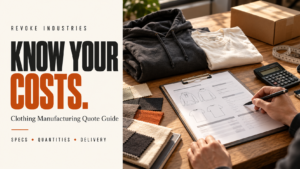
There is no single reliable price for every collection. Costs depend on the garments, materials, quantities, decoration, development, packaging, and delivery. Request an itemized quote for your actual specifications and reserve a budget for revisions.
Can I order a small quantity for my first collection?
That depends on the supplier and product. Ask about minimums per style and color, plus any separate minimums for custom fabrics or trims. Existing materials and fewer variations may make a smaller order more practical.
Do I need to know how to sew to start a clothing brand?
You can hire a pattern maker, technical designer, or manufacturer to handle production tasks. You still need to define the product, evaluate samples, and approve the fit and quality your customers will receive.
Discuss your first collection with Revoke Industries
Planning custom hoodies, T-shirts, tracksuits, or sportswear? Send your designs, quantities, size requirements, and delivery destination. Our team can review the project and discuss the appropriate manufacturing route.
Add comment